Abraham Lincoln Memorial: Must-see spots + insider tips

Discover one of the most-visited national park sites in the country.

The Lincoln Memorial honors Abraham Lincoln, the 16th President of the United States and is among the most iconic landmarks in Washington DC. It is located at the, directly across from the Washington Monument, and is one of the most visited monuments in the country. The Memorial is not only a tribute to Abraham Lincoln, but also a symbol of the ideals that have shaped the American nation.

Design

The Memorial was designed by architect Henry Bacon, drawing inspiration from the classical Greek Doric temple. Its 36 columns represent the 36 states in the Union at the time of Lincoln’s death in 1865. Made of white marble, the building stands as a lasting symbol of Lincoln’s enduring legacy.

Popular things to do

The Statue of Abraham Lincoln: Inside, the central feature is the iconic statue of Abraham Lincoln, seated in a large chair. The 19 feet tall statue was sculpted by Daniel Chester French and symbolizes his leadership and enduring legacy.

Lincoln Memorial. Washington DC, United States. Credit: Carry on Caro

Inscribed text: The Memorial’s interior includes inscriptions of two of Lincoln’s most famous speeches:

  • The Gettysburg Address: During the speech he delivered in 1863, Lincoln redefined the Civil War as a struggle for the survival of democracy, calling for a “new birth of freedom” and a government “of the people, by the people, for the people.”
  • The Second Inaugural Address: This speech, delivered in 1865, calls for healing and reconciliation after the long and bloody Civil War.

The National Mall View: From the steps of the Memorial, take in a magnificent view of the National Mall, stretching east toward the Washington Monument and the U.S. Capitol. This iconic perspective is one of the most photographed sights in D.C.

The 36 Doric Columns: The memorial is framed by 36 towering Doric columns, each representing one of the 36 states in the Union at the time of Lincoln’s death.

Lincoln Memorial. Washington DC, United States. Credit: Carry on Caro

The Reflecting Pool: In front of the Lincoln Memorial, the Reflecting Pool provides a beautiful reflective view of the monument, especially stunning at sunrise or sunset.

Backside of the Memorial: This spot is often overlooked, but don’t miss the chance to experience a different perspective, looking out toward the Potomac River.

Featured tours

Can you take pictures of the Lincoln Memorial?

Photography and videography taken by visitors for personal use do not require a permit. However, National Mall and Memorial Parks, along with other National Park Service sites in the D.C. area, require a permit for any photography or filming that is not for general visitor use.

Tips to visit the Memorial

Lincoln Memorial. Washington DC, United States. Credit: Carry on Caro

Visit early or late for fewer crowds: The Lincoln Memorial can get very crowded, especially during the day. Consider visiting early in the morning or later in the evening when the crowds tend to be thinner.

Wear comfortable shoes: There’s a lot of walking to do at the National Mall and nearby monuments, so comfortable shoes are a must if you want to avoid sore feet after a long day of exploring.

Stay for the evening lights: The Lincoln Memorial is stunningly illuminated after dark. If you’re visiting in the evening, be sure to stick around and see the monument glowing against the night sky.

Is it free to see the Lincoln Memorial?

Yes, there are no fees to visit the Lincoln Memorial.

Nearby attractions

The National Mall: The Lincoln Memorial is located at the western end of the National Mall, surrounded by other iconic landmarks, including the Washington Monument, the World War II Memorial, and the Vietnam Veterans Memorial.

Lincoln Memorial. Washington DC, United States. Credit: Carry on Caro

The Reflecting Pool: Located directly in front of the Lincoln Memorial, this expansive pool offers a striking reflective view of both the memorial and the Washington Monument.

Opening times

The Lincoln Memorial is open 24 hours a day, 365 days a year. Early mornings and evenings tend to be less crowded. Park Rangers are available to answer questions and offer interpretive programs daily from 9:30 a.m. to 10:00 p.m., except on December 25th.

Location

The Lincoln Memorial is located at the western end of the National Mall in Washington, D.C. It is approximately a 2-mile walk from the U.S. Capitol. The nearest metro stations are Foggy Bottom and Smithsonian.

We are part of several affiliate programs including Amazon and Viator which means that we will earn a small commission at no extra cost to you if you make a purchase through the links included in this blog.

National Cathedral Washington, DC: Top Photo Opportunities

Capture the iconic landmark’s best photo spots.

An architectural marvel, the National Cathedral provides both professional and amateur photographers with incredible opportunities to capture stunning images, from its intricate facades to its lush surroundings.

As you visit the National Cathedral, have your camera ready to document the interplay of light and shadow throughout the day. You can be assured that you will leave with remarkable photos that showcase the beauty and history of this iconic landmark.
Below are the best photo spots which you shouldn’t miss.

The West Front

The main entrance showcases a majestic façade that is a masterpiece of Gothic architecture, providing excellent photo opportunities. Visit the National Cathedral during the early morning or late afternoon to capture the way light casts dramatic shadows, highlighting the intricate textures of the stone.

The entryway features a stunning array of detailed stone carvings, including intricate floral patterns, statues of saints, and majestic gargoyles, each telling its own unique story. This level of craftsmanship invites photographers to explore every detail, from the delicate flourishes to the grand sculptures.

The West Front is perfect for wide-angle shots, allowing you to capture the full scale of the cathedral against the expansive blue sky. Don’t forget to include the vibrant greenery of the surrounding gardens in your composition; the contrast between the cathedral’s stonework and the lush landscape creates a visually striking image. Whether you’re capturing the grandeur of the entrance or the subtle details, the West Front offers endless possibilities for stunning photography.

The Nave

National Cathedral. Washington DC. Credit: Carry on Caro

The Nave of the National Cathedral offers some of the most beautiful photographic opportunities within the building. As you enter, you will immediately notice the towering ceilings that soar high above.

Among the standout features of the Nave are the stained-glass windows, which depict a variety of religious themes and historical narrative as well as provide excellent lighting for interior shots. I recommend you capture the sunlight filtering through the windows during the afternoon.

Featured tours

The Garden

The view from the garden towards the cathedral is particularly beautiful when the flowers are in bloom during spring. Tulips, daffodils, and other seasonal blooms create a breathtaking backdrop against the cathedral’s stonework.

I recommend you experiment with different perspectives—including framing the cathedral through blooming branches or capturing close-ups of the flowers with the cathedral in the backdrop.

This spot is usually less crowded, so take a moment to enjoy the serenity of the gardens.

The Bell Tower

If you want to capture a unique perspective of Washington, DC, the Bell Tower at the National Cathedral is a must-visit. Climb the 333 steps to the top, where you’ll be rewarded with panoramic views of Washington, DC’s skyline along with the Washington Monument and the U.S. Capitol visible in the distance.

The climb includes multiple views inside the Cathedral itself, up-close views of stained glass, and access to some of the Cathedral’s oldest stairs. The view is particularly enchanting during golden hour, creating a magical atmosphere for your shots.

To explore the Bell Tower, you’ll need to participate in a special guided tour, which can be easily booked through the official National Cathedral website. These tours often provide insights into the history and significance of the tower, adding depth to your experience. Remember to check the schedule in advance, as tours may fill up quickly, especially during peak seasons. This tour takes around 70-90 minutes.

The Bishop’s Garden

Nestled behind the National Cathedral, the Bishop’s Garden is a hidden gem that features beautiful flowers, a serene pond, and unique sculptures. This enchanting garden is a testament to thoughtful horticulture, showcasing everything from delicate spring blossoms to lush summer perennials. Capture close-ups of the flowers or alternatively frame them against the majestic stone backdrop of the cathedral as you wander the walking paths.

In addition to its stunning floral displays, the garden boasts a tranquil pond that reflects the surrounding greenery and architecture. This peaceful water feature attracts various wildlife, including birds and butterflies, enhancing the garden’s charm.

Scattered throughout the garden are unique sculptures and art pieces. Ranging from classical statues to contemporary installations, each work tells its own story and adds a layer of intrigue to the landscape.

Space Window

This is the Cathedral’s best-known stained-glass window which contains a piece of moon rock donated by Neil Armstrong. Located on the middle level of windows on the south side of the nave, this window is dominated by large circles, creating the impression of gazing into the void of space.

Do you have any other photo spots that you like? Let us know in the comments below!

We are part of several affiliate programs including Amazon and Viator which means that we will earn a small commission at no extra cost to you if you make a purchase through the links included in this post.

Peirce Mill: Experience History in Rock Creek Park

Explore the last operational grist mill in Rock Creek Park, Washington DC.

Built in Rock Creek in 1829, Peirce Mill ground corn, wheat, and rye using water as a power source. Constructed from blue granite, it features an Oliver Evans system that enables continuous operation and simplifies labor. Peirce Mill was designed as an investment to enhance returns for its lessees and boost production.

At one point, Rock Creek hosted several flour, saw, and other industry mills, powered by the creek’s waters, which dropped over 160 feet across 33 miles. Raw materials were supplied by local farms, and wagon paths facilitated transportation to the mills.

Spelling of Peirce

The spelling of the last name “Peirce” was not standardized. Early census records show it spelled as “Peirce,” while other records indicate variations like “Pierce” and “Pearce.” However, the majority of records use the “Peirce” spelling, which is the version the National Park Service has chosen to adopt.

Operating Hours

  • April through October: Friday-Sunday, 10 AM to 4 PM
  • November and December: Weekends, 10 AM to 4 PM
  • January and February: Weekends, 12 PM to 4 PM
  • March: Weekends, 10 AM to 4 PM

Information panels outside the property provide insights into the mill’s history. Plan to visit for around 20 minutes.

The National Park Service conducts mill operation demonstrations on the 2nd and 4th Saturday of each month from April through October.

Peirce Mill. Rock Creek Park, Washington DC. Credit: Carry on Caro

Featured tours

The History of Peirce Mill

Peirce Mill operated as both a merchant and custom mill, grinding corn, wheat, and rye. With just two or three men, the mill could process an estimated 150 bushels of grain per day. Records from 1870 indicate that Peirce Mill produced 40 bushels of wheat flour, 150 barrels of rye flour, and ground 4,075 bushels of corn for animal feed destined for market.

Fast forward to the 20th century: the mill operated through World War II, providing meals to government kitchens, but it was never a significant money-maker. It ran sporadically until 1958, when operations ceased completely due to machinery issues, difficulty in finding trained millwrights, and fluctuating water levels in Rock Creek.

In 1967, there was renewed interest in restarting the mill, and by 1970, it was once again grinding corn under the supervision of Robert Batte and later Brian Gregorie. However, tropical storms in the 1970s caused further damage to the equipment, and the mill operated sporadically until 1993, when a catastrophic failure of the main shaft brought operations to a halt once more.

Peirce Mill reopened as an operating mill in 2011, thanks to the efforts of a nonprofit group called “The Friends of Peirce Mill.” This organization helped raise funds, secure grants, and assisted the National Park Service in restoring the mill to the point where it could once again grind corn.

Peirce Mill. Rock Creek Park, Washington DC. Credit: Carry on Caro

Despite restorations over time, Peirce Mill’s sturdy exterior and interior maintain the authentic appearance and atmosphere of a 19th-century gristmill, featuring the original 1820s stone walls, authentic wooden milling machinery, hand-hewn beams and columns, and heavy oak floorboards.

In 1967, there was renewed interest in restarting the mill and by 1970, the mill was once again grinding corn under the supervision of Robert Batte and later Brian Gregorie.

However, tropical storms in the 1970s caused further damage to the equipment, and the mill operated sporadically until 1993, when a catastrophic failure of the main shaft brought operations to a halt once more.

Peirce Mill reopened as an operating mill in 2011, thanks to the efforts of a nonprofit group called “The Friends of Peirce Mill.” This organization helped raise funds, secure grants, and assisted the National Park Service in restoring the mill to the point where it could once again grind corn.

Despite restorations over time, Peirce Mill’s sturdy exterior and interior maintain the authentic appearance and atmosphere of a 19th-century gristmill. It features the original 1820s stone walls, authentic wooden milling machinery, hand-hewn beams and columns, and heavy oak floorboards.

Peirce Barn

Close to the mill, there is a barn that serves as the visitor center, where you can find information about Rock Creek Park and a gift shop. Restrooms are available in the back.

Location

2401 Tilden St NW, Washington, DC.

The closest metro stations are Cleveland Park and Van Ness-UDC, which are a 30-minute walk downhill to the mill. The mill is also accessible via the Western Ridge Trail.

Parking lots are located across Tilden Street at Picnic Grove #1 and north of the mill off Beach Drive. Peirce Mill has its own parking available, and there is also some street parking nearby.

We are part of several affiliate programs including Amazon and Viator which means that we will earn a small commission at no extra cost to you if you make a purchase through the links included in this post.

Colvin Run Mill: Discover the Beauty of Virginia’s Historic Landmark

Explore a 200-Year-Old Working Mill in Virginia.

Colvin Run Mill is an award-winning, operational 19th-century water-powered gristmill located in Fairfax County, Virginia. The land where the mill stands was once owned by President George Washington. Built around 1811, the mill operated until 1934 and was restored to its current condition by the Fairfax County Park Authority in 1965.

Historically, the miller purchased grain from local farmers, ground it, and sold the flour to stores in Alexandria and Baltimore. These stores provided flour to soldiers and sailors for making hardtack and ship’s biscuits. If you’re interested in seeing the mill in action, visit on the first and third Sundays of the month, from April through October, between noon and 3 p.m. Admission is $10 per person.

Featured tours

Activities

Colvin Run Mill. Virginia, United States. Credit; Carry on Caro

Colvin Run Mill offers a range of recreational and educational activities through tours, school programs, and special events for all ages. In addition to these events, visitors can explore several features on the mill’s grounds.

Barn and Blacksmith Shop

Near the general store, you’ll find the barn and blacksmith shop, built in 1970. Inside the barn, there’s a 1/24 scale model of Colvin Run Mill, along with exhibits showcasing tools used by farmers and tradespeople from the early 20th century. You can also explore the hands-on history trunk, which contains reproductions of historical items used in homes, schools, and workplaces.

Miller’s House

The Miller’s house features a self-guided exhibit about the milling process and the families who operated the mill. In 1883, Addison Millard purchased the mill and moved here with his wife Emma and some of their 20 children. After Addison’s passing, the family continued to run the mill until 1934. The east side of the house includes a lovely garden, providing a serene spot to relax and enjoy the beautiful surroundings.

Explore the Grounds

Enjoy several paved and unpaved trails during your visit. For more information, visit: Colvin Run Mill Trails.

Colvin Run General Store

Originally located across from the mill, the Colvin Run General Store served the local community from around 1890 to the mid-1940s. This historic early 20th-century store offers a variety of products, including white and yellow grits, cornmeal, soft and hard wheat flour, and buckwheat—all ground at the mill. You’ll also find local tea blends from the Great Falls Tea Garden, toys, “penny” candy, jewelry, and mugs. The mill was more than just a store; it served as a gathering place for locals to chat, read newspapers, make phone calls, and receive their mail.

Be sure to check the upper shelves and the items hanging from the ceiling for examples of products that storekeepers Maude and Mark Cockrill may have sold during the store’s heyday from the 1890s to the 1940s. Stop by to see what treasures await! The store is open Friday to Sunday from 11 a.m. to 4 p.m.

Old millstones

See if you can find the old millstones on the hillside across from the mill. These grinding stones were imported from France for various mills in the area and represented a significant investment for mill owners. The Millards utilized the burr stones as part of the grinding process at Colvin Run Mill, even after installing more efficient mills. By combining old and new technology, the Millards produced about 35 barrels of flour per day.

Access to Colvin Run Mill

Admission to the park is free; however, there are fees for tours, programs, and special events offered regularly. The Colvin Run Mill grounds are open daily from dawn to dusk, and you can view the mill and other buildings from the outside without purchasing a ticket.

Location

Colvin Run Mill is located at 10017 Colvin Run Road, Great Falls, VA 22066.

We are part of several affiliate programs including Amazon and Viator which means that we will earn a small commission at no extra cost to you if you make a purchase through the links included in this post.

Burnside Farms: Tulips fields an hour from Washington DC

Tulips everywhere – it’s like Holland in Virginia.

It’s hard to imagine that there could be such an outstanding tulip fields located only one hour from Washington DC. No need to book a flight to Holland to see these anymore! Burnside Farms gives visitors an incredible opportunity to take colorful photos with tulips as the protagonists.

As you start wandering through the fields, you will be surrounded by bright red, yellow, pink, orange tulips everywhere – it’s truly a spectacular sight. Burnside Farms plants more than 150 varieties of tulips and over 30 varieties of daffodils, both of which are shipped from The Netherlands. Every year, the farms plants more than 2 million tulips and daffodils, yep, that’s right!

Where is Burnside Farms located?

Burnside Farms is located at 10800 Kettle Run Road Nokesville, VA 20181. There is plenty of parking outside the farm. Note that the flower fields are located in Nokesville, not neighboring Haymarket, and it’s just passed the local high school parking lot. Please be careful when you enter the address in Google Maps.

Tulips at Burnside Farms, VA. Credit: Carry on Caro

Featured tours in Virginia

When can you see the tulip fields?

The Festival of Spring happens every year at the end of March-April. Exact dates will depend on the weather, but on average the festival lasts about 3 weeks. I recommend you follow Burnside Farms on Instagram so that you are among the first to know when the festival starts – this is key as there is a limit of visitors per day and tickets sell out quickly.

Tulips at Burnside Farms, VA. Credit: Carry on Caro

Should you get tickets in advance?

YES! This is a must since tickets are sold only online. There are NO TICKETS sold at the door. A very limited number of day-of tickets become available at 6:00 AM the day of.

In 2024, weekday tickets cost $25 and weekend tickets $27. Everyone aged 6 and up requires a tickets. You can change your ticket date and or time until 11:59 the night before your ticket date. I don’t recommend doing this as there is a big chance that you will not find any available tickets. This festival has become very popular.

Note that with your ticket, you will get 5 free stems to decorate your house! Additional tulips cost $1 per stem and daffodils 2 for $1.

Is this a fun activity for kids?

Definitely! We saw plenty of kids wandering in the farm. In addition to strolling through the fields, kids can enjoy a nice photo opportunity as they try clogs (the Dutch shoes) and feel how it is to walk in wooden shoes. There is also a play area where kids can burn some steam.

Tulips at Burnside Farms, VA. Credit: Carry on Caro

Any other helpful tips?

Tulips at Burnside Farms, VA. Credit: Carry on Caro
  • Shoes: You will be wandering through so wear sturdy and comfy shoes, especially if it has rained the day before as it might take some time for the to dry and be muddy.
  • Food: Usually, they partner with various food trucks, available opposite of the flowers, but you are welcome to bring your own food and have a picnic while you marvel at the fantastic sight.
  • Camera: Bring your phone or a camera to take pictures. Trust me when I tell you that you will want to be snapping photos everywhere. Unfortunately because of its close location to Dulles International Airport, no drones are allowed.
  • Weather: Check the weather before you go. We visited the farm in the beginning of April and it was quite windy and chilly. Dressing in layers is your best bet.

We are part of several affiliate programs including Amazon and Viator which means that we will earn a small commission at no extra cost to you if you make a purchase through the links included in this post.

Smithsonian Museums, Washington DC – A guide to the must visit museums

Whether you’re an art lover, history buff, or prefer the beauty of engineering, these Smithsonian museums are engaging for everyone.

The Smithsonian, founded in 1846, houses 21 museums and the National Zoo, making it the world’s largest museum complex. With over 154 million items in its collection, we have compiled some of our favorites which shouldn’t be missed while visiting the wonderful city of Washington DC.

Hirshhorn Museum and Sculpture Garden

Laurie Anderson - Four Talks exhibit. Hirshhorn museum, Washington DC. Credit: Carry on Caro
Laurie Anderson – Four Talks exhibit. Hirshhorn museum, Washington DC. Credit: Carry on Caro

Located besides the National Mall, the Hirshhorn Museum and Sculpture Garden features an amazing collection of international modern and contemporary art. The museum, housed in the cylindrical building designed by Gordon Bunshaft, is among the most visited modern art museums in the United States.

We recommend you visit the Hirshhorn Museum and Sculpture Garden to see some of the most important artists of the 21st century through exhibitions and events. Digital media, video and technology exhibits, make this museum one of the most forward-thinking art institutions in the whole world. The museum’s outdoor sculpture garden is also a must-visit.

Read blog: Hirshhorn Museum, Washington Dc: A must-visit hub for cutting-edge art

National Museum of American History

Museum of American history. Washington DC. Credit: Carry on Caro

The National Museum of Natural History is home to a collection of 1.7 million objects and artifacts that explain the history of the country. Through several interactive exhibitions, this museum explains fundamental American ideals and values.

A few of the coolest things to see at this museum are Abraham Lincoln’s top hat, Prince’s gold guitar, Michael Jordan’s championship jersey and the gowns of the First Ladies. The 750,000 square feet museum has 3 floors so plan to be there for a couple of hours at least.

Read blog: The Smithsonian Museum of American History: How to plan your visit

Featured tours

Smithsonian Institution Building (The Castle)

The Castle is the Smithsonian’s oldest building, officially opening its doors in 1855. It was designed by prominent New York architect James Renwick, Jr and sits on the southern side of the Mall, in the center of other Smithsonian museums. The Castle closed in early 2023 to undergo its first major renovation in more than 50 years and will last approximately 5 years.

The Castle was the first building to house Smithsonian exhibits of natural history, art and anthropology. Until it closed for renovation, the Castle housed administrative offices, an information center, exhibits, and the crypt of James Smithson.

Renwick gallery

Renwick Gallery. Washington DC, United States. Credit: Carry on Caro

Located in the heart of Washington DC and only steps away from the White House, the Renwick Gallery features American craft and decorative arts from the 19th to 21st century.

Expect to encounter forward-thinking exhibitions – from contemporary and modern American artists – who are pushing the boundaries while redefining our idea of “craft”. Exhibits feature different handcrafted objects, from quilts, bowl to masks – all prompting the question on the meaning of what craft is. This museum is quite small so set aside a couple of hours and combine it with a visit to the White House.

National Museum of African American History and Culture

Head to the National Museum of African American History and Culture, one of the newest and most visually prominent museums, to learn about the history and culture of the African American.

This museum is the only one exclusive dedicated to the documentation of African American life, history, and culture and has a collection of more than 40,000 artifacts including Michael Jackson’s fedora, Harriet Tubman’s hymnal, a plantation cabin from South Carolina and Nat Turner’s bible.

National Air and Space Museum

The National Air and Space Museum is by far one of the most popular museums in DC and in the world. There is so much demand for more exhibits, the museum is now undergoing a multi-year renovation to feature new galleries.

This museum features an amazing collection of hundreds of aviation and space artifacts. Expect to see astronaut Neil Armstrong spacesuit which he wore during his mission to the moon, touch a sample of lunar rock, and marvel at the 1903 Wright Flyer and the first aircraft to complete a nonstop flight from New York to Paris. Don’t forget to catch a show at the museum’s legendary IMAX theater for a mind-blowing experience.

Keep in mind that free timed-entry passes are required to visit the National Air and Space Museum.

National Museum of the American Indian

National Museum of the American Indian. Washington, DC. Credit: Carry on Caro

Located on Washington DC’s national mall, the National Museum of the American Indian, is housed in a striking building designed entirely by Native architects. Featuring a curvilinear structure and materials resembling rock formations, this building will immediately catch your attention.

This museum, which is dedicated to bringing Native voices to life, features of the world’s most expansive collection of native artifacts – including archives, media, photographs and other objects which provide a comprehensive catalogue of Native American culture. In fact, this museum’s collection will let you walk through 12,000 years of history across 1,200-plus indigenous cultures from the Americas.

National Museum of African Art

National Museum of African Art. Washington DC, United States. Credit: Carry on Caro

The National Museum of African Art is the only museum in the whole country which is dedicated to the collection of the arts in Africa. Featuring a collection of African Art artifacts representing featuring nearly every region of the African continent, this museum provides a comprehensive overview of artistic expressions in Africa.

In addition to featuring over 9,000 ancient and contemporary artifacts, the National Museum of African Art showcases photographs, and 50,000 library volumes. The museum houses a large variety of media and art forms including textiles, photography, sculpture, pottery, painting and jewelry and video art. Don’t miss the film screenings and panel discussions that are offered which serve to increase the dialogue surrounding African art.

National Museum of Natural History

Smithsonian National Museum of Natural History. Washington DC, US. Credit: Carry on Caro

Featuring a collection of 148 million science specimens and artifacts, the National Museum of Natural History tells the story about how the environment and humans interrelate with each other, letting us discover the natural world. Here expect to find dinosaur fossils, rare gems, human origins and replicas of whales, and other marine life.

You can spend quite a few hours at the National Museum of Natural History as its size is comparable to the size of 18 football fields. Note that is it among the most visited Smithsonian museums so it can get pretty packed.

Portrait Gallery

A historic art museum, the National Portrait Gallery aims to tell the story of the United States by portraying famous individuals — including artists, politicians, scientists, inventors, activists, and performers—who played a key role in shaping America’s history, development and culture.

The National Portrait Gallery showcases a compilation 23,000 items in all media, including paintings, prints, drawings, and engravings, performing arts along with new media. Here you can explore several exhibits including The Struggle for Justice focusing on Civil Rights leaders, 20th Century Americans which showcases important figures from the past century as well as America’s Presidents, a complete collection of presidential portraits.

We are part of several affiliate programs including Viator and Amazon which means that we will earn a small commission at no extra cost to you if you make a purchase through the links included in this post.

South Dakota pictures that will make you want to travel

Boasting amazing sites and unique experiences, South Dakota has something for everyone.

South Dakota is filled with natural and unspoiled beauty that will leave you in awe. It’s no wonder that this state epitomizes the classic feel of the American West, a wild and wonderful place. Often referred to as “the land of infinite variety”, South Dakota is the perfect state for those looking for adventure.

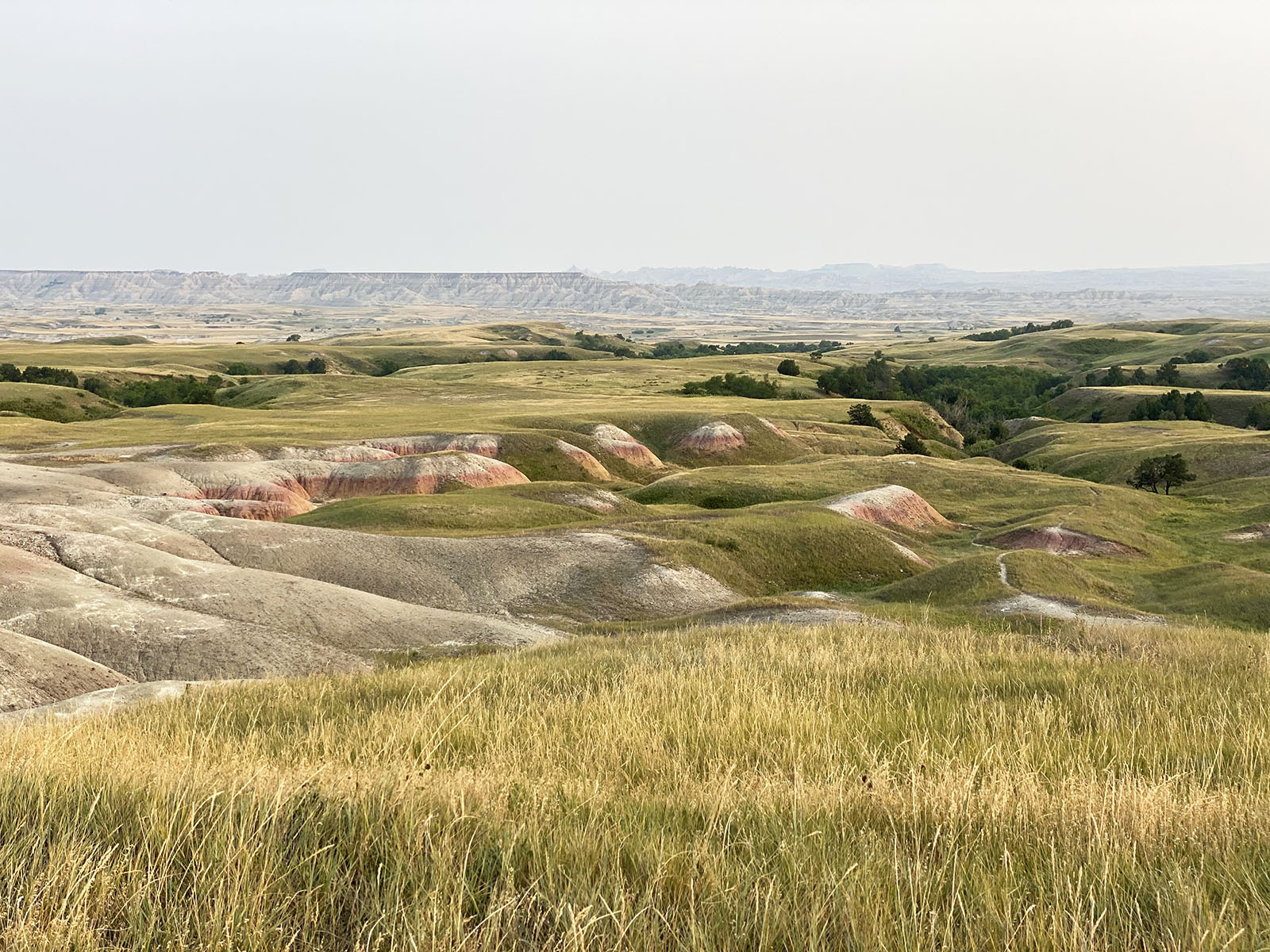
There are tons of adventures to be had, you can explore many sites including the Badlands, featuring buttes, canyons, and pinnacles that will be forever imprinted in your mind. Mount Rushmore also awaits your visit – with the 60-foot faces of four great American presidents.

And don’t forget Custer Park, the home of more than 1,300 bison as well as elk, mountain goats, and pronghorn antelopes. But this is just the tip of the iceberg – there are other incredible natural attractions that deserve a visit.

Below is a compilation of photos we took when visiting South Dakota, which we hope they will encourage you to visit this magnificent state.

Badlands National Park. South Dakota. Credit: Carolina Valenzuela

Pinnacle Overlook. Badlands National Park, South Dakota. Credit: Christian Bergara
Badlands National Park. South Dakota. Credit: Carolina Valenzuela

The Notch Trail. Badlands National Park, South Dakota. Credit: Carolina Valenzuela
Badlands National Park, South Dakota. Credit: Carolina Valenzuela

Hiking the Notch Trail. Badlands National Park, South Dakota. Credit: Christian Bergara

Hiking the Notch Trail. Badlands National Park, South Dakota. Credit: Carolina Valenzuela
Badlands National Park. South Dakota. Credit: Carolina Valenzuela
Yellow Mounds Overlook. Badlands National Park, South Dakota. Credit: Carolina Valenzuela

Featured tours

Badlads National Park, South Dakota. Credit: Carolina Valenzuela
Mount Rushmore, South Dakota. Credit: Carolina Valenzuela
Cathedral Spires trail. Custer State Park, South Dakota. Credit: Carolina Valenzuela
Custer State Park, South Dakota. Credit: Carolina Valenzuela

We are part of several affiliate programs including Viator and Amazon which means that we will earn a small commission at no extra cost to you if you make a purchase through the links included in this post.

Renwick gallery: Explore craft and design in American culture

A DC museum that’s home to forward-thinking exhibitions.

The Renwick Gallery is located only a few steps away from the White House in the heart of Washington DC. It’s a perfect pit stop for those who are visiting the area, especially during the summer.

Named after the architect, the Renwick is one of the prettiest locations in the city; this museum is housed in a 160-year-old building, which was the first in the country specifically built to become an art museum.

In fact, the building hosted the Corcoran’s (DC’s famous art school), collection of American and European art until the early 1970s. It was only during the American Civil War that the Renwick was used for something other than housing art – it was converted to a military warehouse and headquarters.

Relevance of craft

In modern times, the Renwick Gallery opened its doors in 1972 to showcase the relevance of craft and design in American culture. Over time, the Gallery has evolved to feature different expressions and definitions of craft – centered around an avantgarde collection.

Featuring a variety of multimedia works, the museum’s collections ranges from a variety of multimedia mediums, with materials including is clay, fiber, glass, metal, and wood. The Renwick is home to forward-thinking exhibitions from contemporary and modern American artists who are pushing the boundaries while redefining our idea of “craft”.

Expect to find a permanent collection which is filled with unusual pieces. Handcrafted objects including quilts, bowl, and masks offer moments of reflection by prompting questions on the meaning of craft, as well as how it’s relevant to both the present moment and future.

Renwick Gallery. Washington DC, United States. Credit: Carry on Caro

Temporary exhibits

Here are some of the exhibits we enjoyed the most while visiting the Renwick gallery:

Janet Echelman’s 1.8 Renwick (until January 2025): Suspended from the ceiling, this colorful fiber and lighting installation aims to” examine the interconnections between human beings and our physical world.” The changing lights cast shadow drawing in colors that move from wall to wall. All in all, it is quite an immersive experience as the piece not only hangs above your heads, but plays with dynamic perspectives.

The massive form hanging from the ceiling is inspired by the data recorded as the 2011 tsunami rippled across the Pacific Ocean towards Japan. The geologic event was so powerful that it shifted the earth on its axis and shortened the day by 1.8 millionths of a second – which explains the title of this exhibit.

Sharing Honors and Burdens: Renwick Invitational 2023: This is the first All Native American or Native Alaskan collection featured in the Renwick Invitational. Consisting of 55 pieces on exhibition by six artists, the collection symbolizes the honors and burdens connecting people to one another. The artists are Joe Feddersen, Lily Hope, Ursala Hudson, Erica Lord, Geo Neptune (Passamaquoddy) and Maggie Thompson.

This Present Moment: Crafting a Better World: This exhibit was conceived to celebrate 50 years of the modern Renwick gallery. It features 135 objects artworks made by a diverse group of American artists featuring stories of resilience, methods of activism, and highlights craft’s ability to spark conversations about race, gender, and representation.

Renwick Gallery. Washington DC, United States. Credit: Carry on Caro

How long do you need at the Renwick Gallery

The Renwick Gallery has only two floors so it’s quite compact. An hour will give you plenty of time to see all the exhibits.

Opening hours and entrance fees

The Renwick Gallery is open from Monday to Sunday from 10:00 am to 5:30 pm. As with other Smithsonian institutions, entrance is free of charge.

Accessibility

All areas of the building are served by elevators. Accessible restrooms are also found throughout the museum.

Renwick Gallery. Washington DC, United States. Credit: Carry on Caro

How to get to the Renwick gallery

The Renwick Gallery is located at Pennsylvania Avenue at 17th Street, NW. The closest Metro stations are Farragut West (Blue, Orange, and Silver lines) and Farragut North (Red line).

Featured tours in Washington DC

We are part of several affiliate programs including Viator and Amazon which means that we will earn a small commission at no extra cost to you if you make a purchase through the links included in this post.

National Museum of Natural History: Best things to do

Discover the natural wonders of the world through a collection of 148 million science specimens and artifacts.

The National Museum of Natural History has a collection of 148 million science specimens and artifacts which aims to tell the story of our planet. What sets this museum apart is the level of hands-on experience, where you can get a true sense of how the environment and humans interrelate with each other. Through showcasing dinosaur fossils, rare gems, human origins and replicas of whales, and other marine life, the museum aims to educate; ultimately, letting us discover the natural world.

Centrally located in Washington, DC on the National Mall, the Museum of Natural History is the most visited of the Smithsonian museums and welcomes millions of visitors every year. This museum is huge – comparable to the size of 18 football fields. However, the exhibits are so interesting and fascinating that you won’t feel overwhelmed. Obviously, dinosaur bones call for families and school trips so it’s always busy. We were there at the end of the day though and it wasn’t that bad.

What to do

There are several interesting exhibits and permanent exhibitions – here are some of your favorites.

Hope Diamond: Weighing 45.52 carats (yep, you read it right) and featuring a grayish-blue color, the Hope Diamond made its way from a mine in India, to the court of Louis XIV of France, merchant houses and to the homes of the American elite. So how much is the Hope Diamond worth? Probably millions! This iconic item is rumored to be cursed after several individuals have gone to misfortune after possessing it. However, research has shown that this curse was made up.

The rotunda: As you enter the National Museum of Natural History you will be greeted by Henry, an 11-ton and 13 foot tall African Bush elephant. The rotunda, designed in the Beaux-Arts style is a good starting point for your visit where you will find the information desk along with information about the African elephant ecology, and the threat of poaching. Here you can also purchase tickets to the Butterfly Pavilion.

The rotunda. National Museum of Natural History. Washington DC. Credit: Carry on Caro

David H. Koch Hall of Human Origins: In this 15,000-square-foot gallery you can get a closer look at the human origins over the past 6 million years. In this exhibit, discover stories of extinction and survival, compare five early human skulls to see how our braincases and faces have evolved, and visit a station where you can see how you’d look like as an early human. You can even email yourself a copy so you can show it to your friends!

National Museum of Natural History. Washington DC. Credit: Carry on Caro

David H. Koch Hall of Fossils: This gallery features 700 specimens, including Tyrannosaurus rex and triceratops dinosaur. This collection explores how Earth’s past is not only connected to our present but also informs our future. The David H. Koch Hall of Fossils will make you explore ancient ecosystems and also view the evoluation of both plant and animal life. This exhibit is perfect for those of you who are dinosaur lovers – my husband is one, and it took us a while to be able to move on to another gallery (sigh!).

National Museum of Natural History. Washington DC. Credit: Carry on Caro

Eternal Life in Ancient Egypt: Another of my husband’s favorites. The Eternal Life in Ancient Egypt exhibition includes 3 human and 16 animal mummies along with ceramics, tools, and jewelry excavated from Egyptian ancient tombs. Ancient Egyptians firmly believed death marked the beginning of a journey to eternal life and a person could not reach the afterlife if their bodies did not survive, this is why they persevered the bodies of the deceased by creating mummies.

The butterfly pavilion: To enter the butterfly pavilion you need to pay a small fee. However, tickets are free on Tuesdays on a first come, first served basis. Here you can explore how both plants and butterflies have evolved through the years; you will also be able to walk among boatloads of tropical plants. Get close and personal with a large number of butterflies as they are flying freely around the pavilion.

Bone Hall: The skeletons on display in the Bone Hall have been available since 1881 in what today is known as the Arts and Industries Building. These skeletons represent a vast collection of every major group of vertebrate animals. Oh, and don’t forget to look up to observe a skeleton of a gray whale hanging from the ceiling.

The Sant Ocean Hall: This is the largest exhibit in the museum. With 674 marine specimens and models and video, it provides an opportunity for visitors to explore the ocean’s life

National Museum of Natural History. Washington DC. Credit: Carry on Caro

How to get to the National Museum of Natural History

You can enter the museum either from the National Mall on Madison Drive or Constitution Ave. The closest metro stations to the museum are:

  • Federal Triangle Metro station, located on the Blue, Orange, and Silver lines
  • Archives/Navy Memorial station on the Green and Yellow lines
  • Metro Center station on the Red line.

You can also drive but please note that finding parking can be challenging, especially during the weekends.

How much time do you need at the National Museum of Natural History?

Being so large and with so many exhibits you can spend half a day easily. However, we think that 2 hours is enough to see the most interesting exhibits. If you want to get a map to get you oriented note that they you will have to pay a small fee. There is also an online version if you don’t want to pay for it.

Opening times and entrance fees

The National Museum of Natural History is open 7 days a week from 10:00 am to 5:30 pm except on December 25. As with other Smithsonian museums, entrance is free of charge.

We are part of several affiliate programs including Viator and Amazon which means that we will earn a small commission at no extra cost to you if you make a purchase through the links included in this post.

Visiting Arlington national cemetery: The best things to see and do

An iconic cemetery where some of the United States most notable heroes have been laid to rest.

Considered the most famous military cemetery in the United States, the Arlington National Cemetery is the final resting place for over 400,000 military veterans. These veterans served the United States from the fronts of Iraq and Afghanistan, World Wars I and II, the Korean conflict, Vietnam, the Cold War and America’s Civil War. Their eligible family members are also buried here.

Founded in 1866, the Arlington National Cemetery offers a solemn place to reflect about the sacrifices made by the United States Armed Forces in the name of the country. The Arlington national cemetery conducts between 27 and 30 funeral services every weekday and between 6 to 8 services on Saturdays.

Additionally, more than 3,000 ceremonies and memorial services are carried out every year, including national observances for Memorial Day and Veterans Day which are held at the Memorial Amphitheater. There is no better place to honor the service men and women who have fought for their country.

Arlington National Cemetery is located on a 639 acres of land that once belonged to the step-grandson of George Washington, George Washington Parke Custis. Back in 1857, Custis gave the property to his daughter, which became the house of her family and her husband, Robert E. Lee. After the Lee family left the home during the onset of the Civil War, the parcel was used for several purposes including as a camp and headquarters for Federal Troops; later it ironically became a safe haven for former slaves.

Tip: Download the Arlington National Cemetery app to easily locate gravesites, events and other points of interest throughout the cemetery.

Key sites at Arlington National Cemetery

The Tomb of the Unknown Soldier: The neoclassical, white marble sarcophagus standing atop a hill overlooking DC, is a tribute to unidentified fallen soldiers who fought during World War I, World War II, Korea and Vietnam. Guarded 24 hours a day, 365 days a year by Tomb Guard sentinels, the Tomb of the Unknown Soldier is the Arlington National Cemetery most iconic memorial, an eternal symbol of service and sacrifice.

The Tomb of the Unknown Soldier. Arlington cemetery. Washington DC, US. Credit: Carry on Caro
Arlington cemetery. Washington DC, US. Credit: Carry on Caro

The Changing of the Guard ritual: Every hour on the hour from October 1 to March 31, and every half hour from April 1 to September 30, visitors can witness the change of military guard at the Tomb of the Unknown Soldier. This is a very solemn ceremony that you should participate in when visiting.

The Changing of the Guard ritual. Arlington cemetery. Washington DC, US. Credit: Carry on Caro

The gravesite of President John F. Kennedy: Only a few days after he was assassinated in an open-car motorcade on the streets of Dallas during a campaign stop, President Kennedy was buried at the Arlington national cemetery. President Kennedy is one of only two presidents (along with William Howard Taft) buried at Arlington.

The gravesite of President John F. Kennedy. Arlington cemetery. Washington DC, US. Credit: Carry on Caro

The original Kennedy gravesite was small and surrounded by a white picket fence, however, it couldn’t withstand the large numbers of mourners visiting this grave. Three years after Kennedy’s death, more than 16 million people had visited the gravesite. To accommodate the hoards of visitors, a sturdier site was constructed. An eternal flame, lit by Mrs. Kennedy, burns from the center of a granite stone at the head of the grave.

Arlington House: Constructed between 1808 and 1818, and sitting on a hill guarding the cemetery, Arlington House is the former residence of Robert E. Lee. While the owner’s history in the Civil War is problematic, this landmark cannot be missed; take the chance to walks through both the bright and dark sides of American history by visiting the house, which is open for public tours daily. Arlington House honors Robert E. Lee including for his role in promoting peace and reunion after the Civil War.

Arlington cemetery. Washington DC, US. Credit: Carry on Caro

Visitor center: Stop by for a quick visit to grab a map, use the restrooms (keep in mind that there won’t be any other restrooms here except in the Arlington House) and view exhibits. Also, here you can join the bus tours that stops at several points of interests throughout the cemetery.

Memorials: There are several memorials and monuments that have been built and are worth a visit. These include: the Spanish American War Memorial, Civil War Unknown monument, Vietnam War Memorial Tree, World War I and II memorial Trees and the Space Shuttle Memorial to name a few.

Arlington cemetery. Washington DC, US. Credit: Carry on Caro

Important tips:

Arlington cemetery. Washington DC, US. Credit: Carry on Caro
  • A visit to the Arlington National Cemetery requires lots of walking and sometimes uphill so make sure you bring comfortable shoes. It’s not a strenuous walk, but you will be on your feet the entire time.
  • You will not encounter much shade when walking throughout the cemetery. Bring a hat, sunscreen and water to keep hydrated especially during DC summer months when the heat can be unbearable.
  • There is a lot to see here so allow for a couple of hours.

How to get to Arlington National Cemetery

Arlington National Cemetery is located in Arlington across the Memorial Bridge. Take the blue line and get off at the Arlington Cemetery stop. There are also metrobuses that also stop here. Note that the entrance is free.

We are part of several affiliate programs including Viator and Amazon which means that we will earn a small commission at no extra cost to you if you make a purchase through the links included in this post.

Secret Link